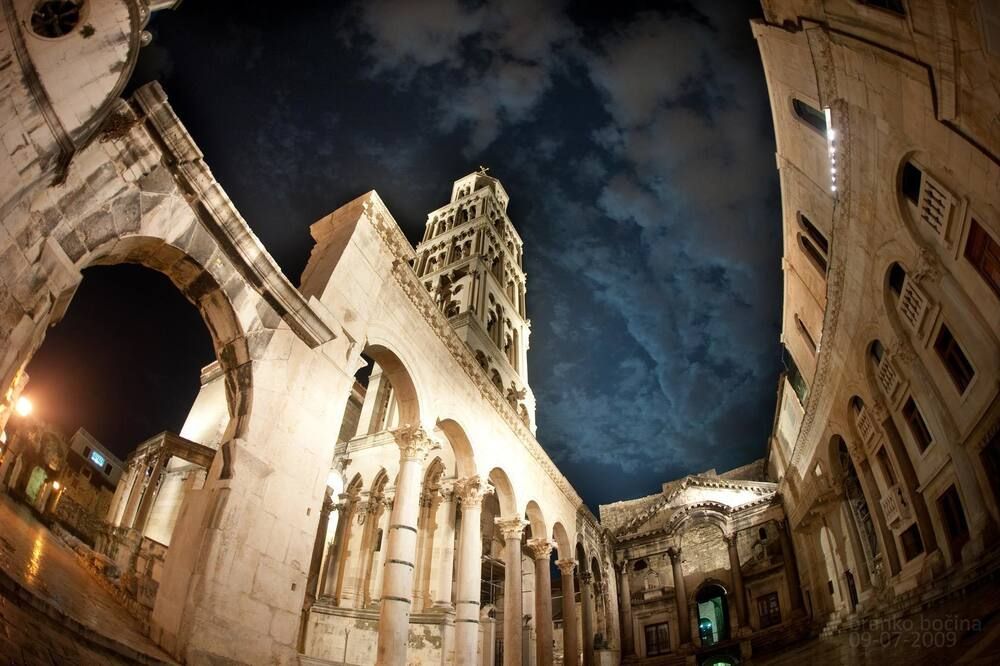
Peristyle Square, locally called Peristil, is the central ceremonial courtyard of Diocletian’s Palace, right in Split’s Old Town.
Why stay near Peristyle Square
Peristyle Square, locally called Peristil, is the central ceremonial courtyard of Diocletian’s Palace, right in Split’s Old Town. Built in the late 3rd to early 4th century AD, it’s where Emperor Diocletian once appeared before his subjects. Today it’s a free, open public square that you simply walk into while exploring the palace streets. What sets it apart is how compact it is: within a small space you’re surrounded by Roman columns, the Cathedral of St. Domnius, the Vestibule, and an Egyptian sphinx that was already ancient when it arrived here. It feels less like a monument you enter and more like a place the city still uses every day.
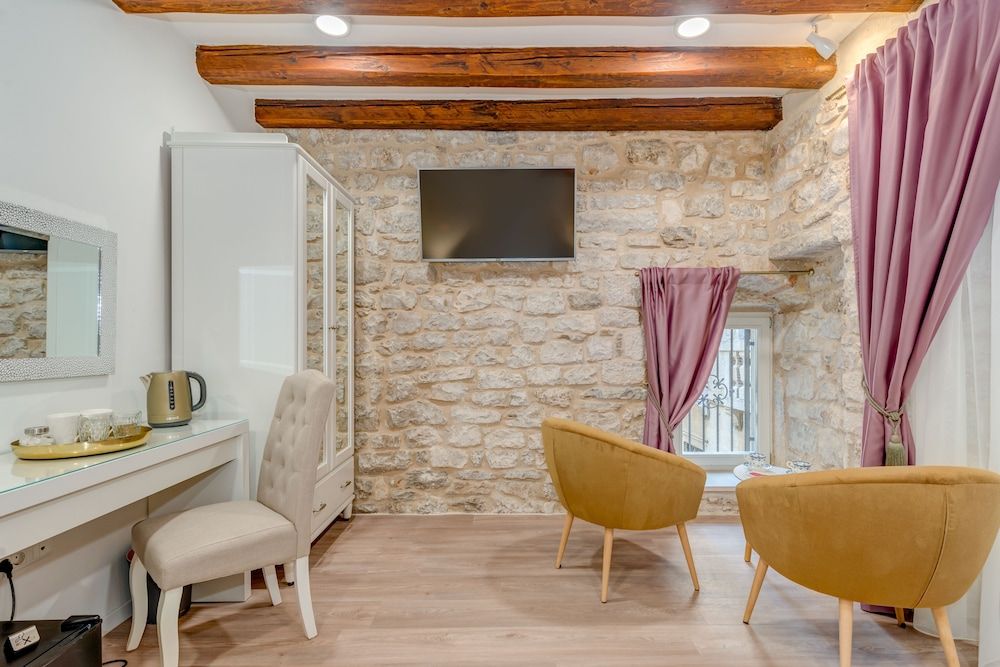
Calm old-town guesthouse steps from Diocletian’s Palace, with handy self check-in.8.2 · 24 reviews
Where they sit around Peristyle Square
Loading map…
About Peristyle Square
Peristyle was designed as the formal heart of Diocletian’s retirement palace, completed around AD 305. From beneath the Protyron arch, the emperor addressed citizens who approached the square in carefully staged rituals. The red granite columns weren’t decorative flourishes; the color was associated with imperial authority and reinforced Diocletian’s status.
After the Roman Empire declined, the palace didn’t empty out. People kept living inside its walls, and Peristyle gradually shifted roles. Diocletian’s mausoleum became the Cathedral of St. Domnius during the medieval period, turning the square into a religious center rather than an imperial court. One of the most unusual survivals is the Egyptian sphinx on the eastern side, dating to around 1500 BC and brought from Egypt by Diocletian. This continuous use is a key reason Diocletian’s Palace, including Peristyle, was inscribed on the UNESCO World Heritage List in 1979.
Best time to visit
You can visit Peristyle at any hour, but it’s quietest early in the morning before day‑trippers arrive. Late afternoons and summer evenings are busier, especially when the square is used as an open‑air stage for concerts or opera. There’s no closing time or lighting schedule to plan around; it functions like a normal city square day and night.
Getting there
Peristyle Square sits in the pedestrian core of Split’s Old Town. From the Riva promenade or the Split ferry port, it’s a 5–10 minute walk through the streets of Diocletian’s Palace. Cars can’t enter the palace area, and there’s no parking anywhere near the square.
Things worth knowing
There’s no ticket or gate — Peristyle is a free public square open 24/7.
Go early in the morning if you want photos without crowds or tour groups.
Seats on the stone steps are informal and often used by locals; there’s no restriction on sitting.
Budget separately if you want to enter the Cathedral of St. Domnius, bell tower, or Temple of Jupiter — each has its own ticket.
Don’t plan to drive here; the entire palace area is pedestrian only.
If being steps from Peristyle matters, stay inside or right next to Diocletian’s Palace in Split Old Town. You’ll be within minutes on foot, but parking is limited and nights can be noisy. Veli Varoš, just west of the palace, is a good compromise: still walkable, quieter after dark, and more residential. Bačvice suits guests wanting beach time along with Old Town sightseeing, though it’s less historic and a slightly longer walk. All three areas work without needing transport.
Common questions
Is Peristyle Square free to visit?
Yes. Peristyle is a public square within Diocletian’s Palace, open 24 hours a day with no entrance fee or ticket required.
How long do you need at Peristyle Square?
Most visitors spend about 10–20 minutes in the square itself, longer if you’re sitting, taking photos, or visiting nearby monuments.
Can you go inside buildings from Peristyle?
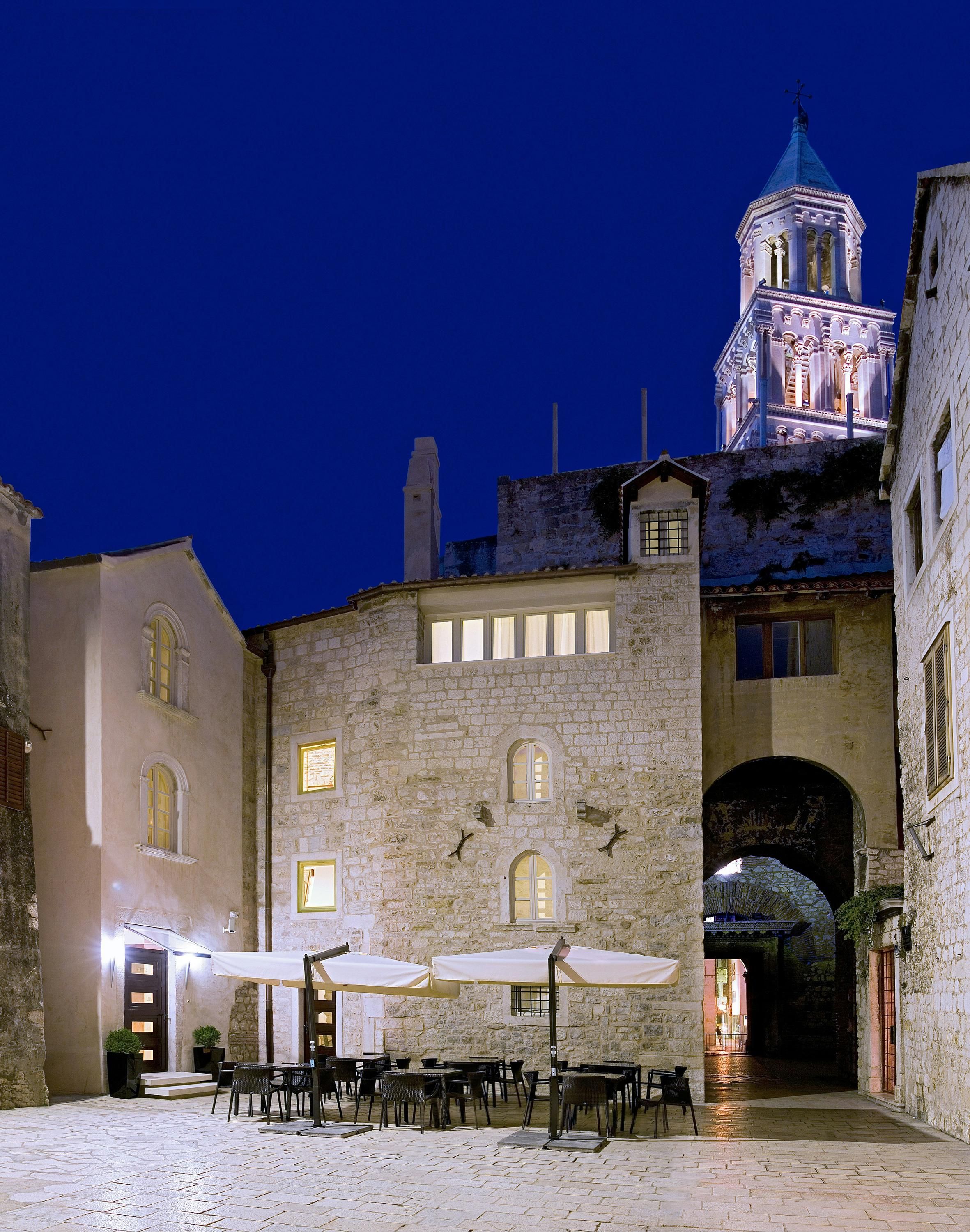
Yes. Entrances to the Cathedral of St. Domnius, its bell tower, and the Temple of Jupiter all open directly onto the square, each with separate paid tickets.
Why is there an Egyptian sphinx in Peristyle Square?
Emperor Diocletian brought sphinxes from Egypt to decorate his palace. The surviving sphinx on Peristyle dates to around 1500 BC.