Hotels Near Shinjuku Gyoen National Garden — 892 places | PriceRoom
WhereCity, hotel or point of interest
Check-inAdd dates
Check-outAdd dates
Who2 Guests
Tokyo · Japan · Landmark
Hotels near the Shinjuku Gyoen National Garden
Shinjuku Gyoen National Garden is a 58.
Why stay near Shinjuku Gyoen National Garden
Shinjuku Gyoen National Garden is a 58.3-hectare national garden on the boundary of Shinjuku and Shibuya, managed by Japan’s Ministry of the Environment. What draws people here is how different it feels from the city around it: once inside the gates, traffic noise drops away and space opens up. The garden’s defining feature is that it combines three distinct styles—Japanese, French formal, and English landscape—within one enclosed area. Visitors come for unhurried walks, seasonal flowers, and long, open sightlines that are rare in central Tokyo.
Compact Shinjuku stay near the station with quiet, soundproofed rooms and bathtubs.8.5 · 1 reviews
Where they sit around Shinjuku Gyoen National Garden
Loading map…
About Shinjuku Gyoen National Garden
The site began in 1590 as a daimyō estate granted by Tokugawa Ieyasu to his retainer Naitō Kiyonari during the early Edo period. In 1872, during the Meiji era, the government converted the land into an agricultural experiment station as part of Japan’s modernization efforts. By 1906, it had been completed as an imperial garden, with design input from French surroundings architect Henri Martinet, blending Western garden principles with Japanese traditions.
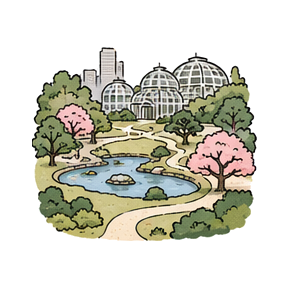
Much of Shinjuku Gyoen was destroyed during World War II air raids, but it was rebuilt and reopened to the public in 1949. Today, visitors experience three clearly defined zones rather than a single continuous design: a Japanese garden with ponds and stone lanterns, a French formal garden with straight paths and plane trees, and an English surroundings garden with broad lawns. The grounds also include a large greenhouse with tropical and subtropical plants and historic structures such as the Former Goryōtei (Taiwan Pavilion).
Best time to visit
Late March to early April is peak cherry blossom season, when crowds are largest and advance reservations may be required on busy days. Autumn, especially October and November, brings fall color with noticeably fewer visitors. For a quieter experience at any time of year, weekday mornings are calmer, particularly outside the spring bloom period.
Getting there
Shinjuku Gyoen has multiple gates, making access easy from different directions. Nearby stations include Shinjuku-gyoenmae Station on the Tokyo Metro Marunouchi Line, Shinjuku-sanchōme Station on the Marunouchi, Fukutoshin, and Shinjuku Lines, and Sendagaya Station on the JR Chūō-Sōbu Line. From Shinjuku Station, it’s about a 10-minute walk to the Shinjuku Gate.
Things worth knowing
Alcohol, smoking, sports equipment, and musical instruments are prohibited inside the garden.
During cherry blossom weekends, advance reservations may be required even if you already have tickets.
IC cards such as Suica and PASMO are accepted at entry gates, which speeds up admission.
Plan around 2–3 hours to see all three garden styles at a relaxed pace.
Staying near Shinjuku Gyoen makes early morning visits and repeat walks easy, especially during busy seasons like cherry blossom time. Shinjuku-sanchōme is the most convenient base, with several garden gates and multiple subway lines close by. The south and east sides of Shinjuku suit guests wanting major transport hubs and nightlife, with the garden still walkable. Yotsuya offers a quieter, more residential feel while remaining within walking distance of the garden’s northern edges. Staying farther west in Shinjuku or over in Shibuya trades proximity for more nightlife or shopping.
Common questions
How long should I spend at Shinjuku Gyoen National Garden?
Most visitors spend about 2–3 hours inside the garden. This allows enough time to walk through the Japanese, French formal, and English surroundings gardens at an unhurried pace and visit the greenhouse.
Is Shinjuku Gyoen National Garden free to enter?
No, entry is paid. Official e-tickets are available, and people with qualifying Japanese disability certificates can enter free with one caregiver.
Do I need to book tickets in advance?
On regular days, advance booking is optional, but during cherry blossom season, reservations may be required on busy days. Checking the official site before visiting is recommended.
When is the garden closed?
The garden is usually closed on Mondays, except during peak cherry blossom periods or when Monday is a public holiday. Closing times vary by season, with last entry 30 minutes before closing.