
Hotell nära Tule Springs Archaeological Site
Tule Springs Archaeological Site sits within Tule Springs Fossil Beds National Monument on the north edge of Las Vegas and North Las Vegas.
Därför bor du nära Tule Springs Archaeological Site
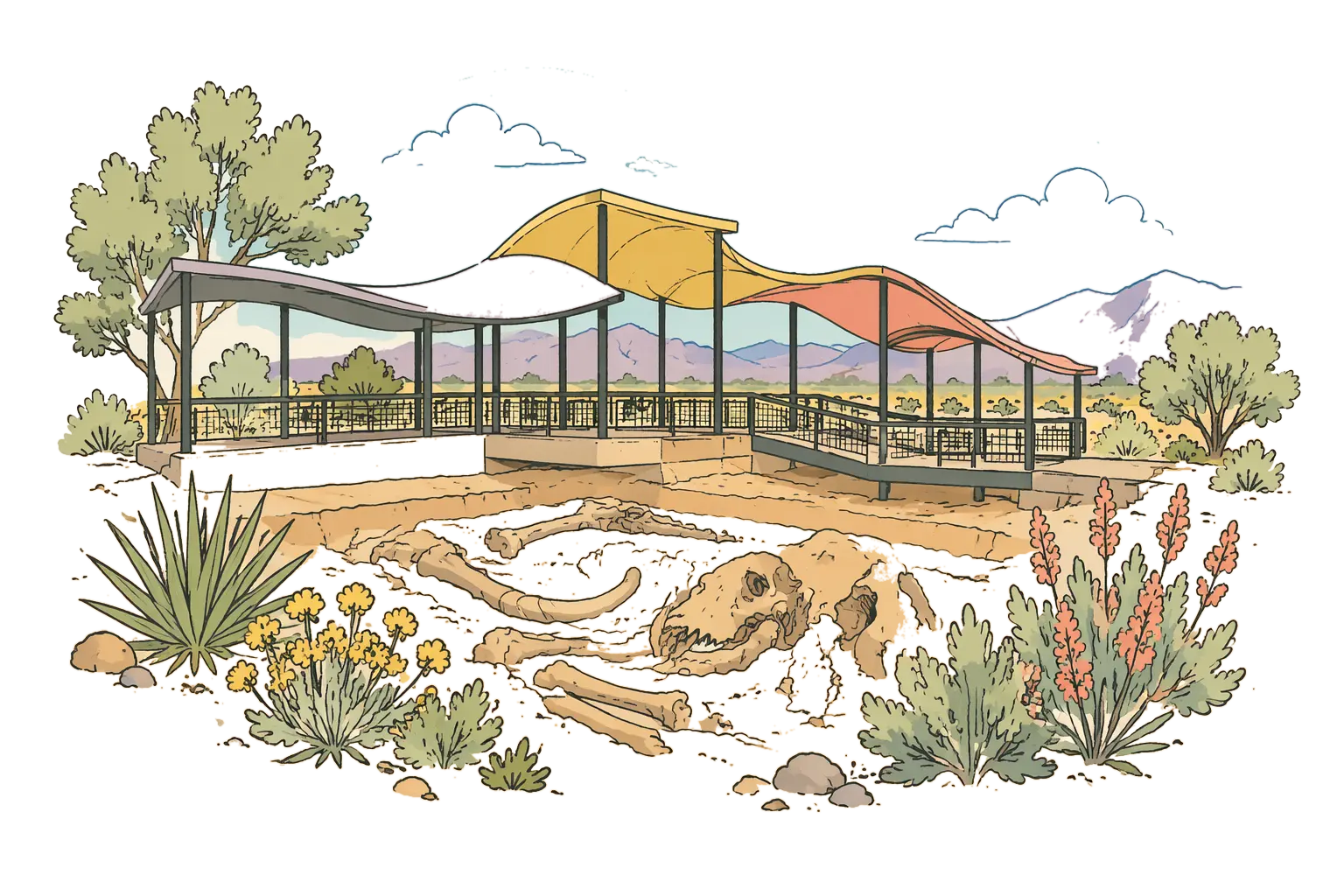
Tule Springs Archaeological Site sits within Tule Springs Fossil Beds National Monument on the north edge of Las Vegas and North Las Vegas. It protects a wide sweep of desert washes where Ice Age wetlands once supported mammoths, camels, dire wolves, and saber‑toothed cats. People come for quiet walking and to read the landscape itself rather than view exhibits. The most distinctive thing is how urban it feels and doesn’t at the same time: 22,650 acres of federally protected land minutes from subdivisions, with fossils preserved in place in the ground instead of displayed behind glass.
Om Tule Springs Archaeological Site
The Tule Springs area preserves sediment layers laid down over roughly 570,000 years, documenting repeated shifts between wetter Ice Age climates and today’s desert. Fossils found here include Columbian mammoths, ancient horses, camels, bison, lions, and dire wolves, making it one of the Southwest’s most scientifically important Ice Age sites. The land lies within the ancestral homelands of the Nuwu/Nuwuvi (Southern Paiute), for whom the springs were critical water sources long before European settlement. Archaeological work at Tule Springs also played a role in the early development of radiocarbon dating in North American archaeology, even though early claims of extremely ancient human occupation alongside megafauna are no longer accepted. The area was formally protected in 2014, when it was designated Tule Springs Fossil Beds National Monument and placed under National Park Service management. What you experience today is open desert washes and low badlands, with no museum-style displays inside the monument.